Plants
Sabie Sands Game Reserve - Greater Kruger National Park
Plants
Sabie Sands Game Reserve - Greater Kruger National ParkThere are thousands of varieties of plants in the Sabi Sands Game Reserve and the Kruger National Park.
All plants, whether grasses or others, vary in their attraction as food depending on how tasty they are, or how high the actual food value is. There are two types of plants that offer food to the animals. Grasses and non-grasses.
There are also two types of Herbivores. Grazers and Browsers.
A few animals, like Impala and Elephant graze and browse. Their choice wil depend on which plants offer the best quality food in the area. Different grazers eat different types of grass in the varying seasons. However they do have preference about the height of the grass they graze. Roan and Sable Antelope feed off taller grasses. Wildebeest prefer very short grass, and therefore often follow Zebra that graze medium-height grasses. Grass savannah provides food for a large number of animals. Therefore grazers are often heard animals.
Wooded bush areas, cannot feed as many animals as the same size grassland. Browsers therefore tend to be solitary or in small groups.
Termites carry dry grasses and leaves below the surface of the ground into the termitaria (anthills or termite mound). This fertilises and aerates the soil. The recycling of plant material is essential to ensure that the food taken out of the soil by the vegetation is returned to the earth for future growth.
This is by no means a complete listing but only a selected few.
GRASSES
BLUE BUFFALO GRASS - CENCHRUS CILIARIS
This grass is very palatable when young and grows about 1M tall and is found is most soils and termitaria.
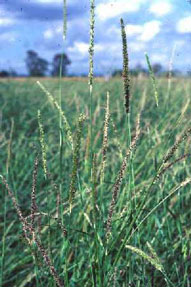
VLEI BRISTLE GRASS - SETARIA INCRASSATA
This grass is used by most grazers, it grows up to 2M and is found in heavy clay soils and marshes
FINGER GRASS - DIGITARIA ERIANTHA
This grass is found all over the Sabi Sands in open areas and grows up to 1.4M
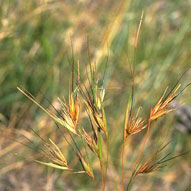
ROOIGRAS - THEMEDA TRIANDRA
This grass is used by grazers and can be found in undisturbed grassland areas and can grow up to 1.5M
GUINEA GRASS - PANICUM MAXIMUM
All the animals seem to like this grass, especially the White Rhino. Found mostly in damp places in the shade of trees and along rivers. Can grow up to 2.5M
SPEAR GRASS - HETEROPOGON CONTORTUS
This grass is preferred by Roan and Waterbuck and is found in open areas and along road sides and can grow up to 0.7M
TREES
SCENTED THORN - ACACIA NILOTICA
Can grow up to 4M and has a short bare crooked trunk that divides low. Its crown spreads round and the branches hang downward. This tree is important browsing for smaller Antelope.
DELAGOA THORN - ACACIA WELWITSCHII
Can grow up to 15M. It usually has a straight trunk that is high branching with many lateral twigs. This also an important food plant for many browsers.
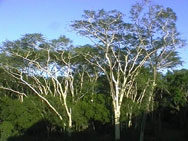
FEVER TREE - ACACIA XANTHOPHLOEA
Can grow up to 15M and has a slender bare fairly high branching trunk. Its bark is a unique yellowy-green. Leaves, branches and gum are extensively damaged by elephants.
BRACK THORN - ACACIA ROBUSTA
Can grow up to 20M and has high branching trunk that stretches upwards. This tree is sometimes browsed by elephants & kudu.
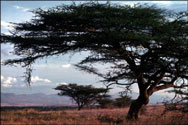
UMBRELLA THORN - ACACIA TORTILIS
Can grow up to 11M and has a short trunk that branches out laterally to form an umbrella shape. This tree is heavily browsed by all browsers.
|
 Fever Tree |
 Vlei Bristle Grass |
 Rooi Grass |
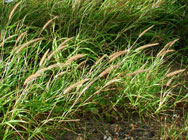 Blue Buffalo Grass |
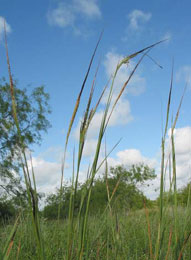 Spear Grass |
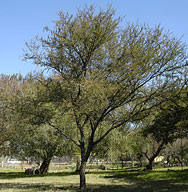 Scented Thorn |
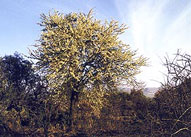 Brack Thorn |